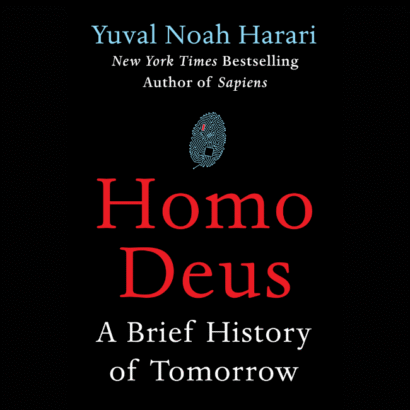




Description
Homo Deus: A Brief History of Tomorrow
By Yuval Noah Harari
Book Summary:
“Homo Deus: A Brief History of Tomorrow” is a non-fiction book written by Yuval Noah Harari, an Israeli historian and professor. The book is a follow-up to Harari’s previous book, “Sapiens: A Brief History of Humankind,” and explores the future of humanity, focusing on the potential developments and challenges that lie ahead.
Book Overview:
The book is divided into three parts, each exploring a different aspect of the future of humanity:
- The Cognitive Revolution:
- Harari discusses the rise of artificial intelligence (AI) and its potential to surpass human intelligence, leading to a new era of human history.
- The Biological Revolution:
- Harari explores the potential for humans to enhance their bodies and minds through technology, such as genetic engineering and brain-computer interfaces.
- The Data Revolution:
- Harari examines the impact of data collection and analysis on human society, including the potential for surveillance and control.
Key Concepts:
- The Homo Deus Hypothesis:
- Harari proposes that humans may eventually become a new species, Homo Deus, characterized by their ability to create and control their own destiny through technology.
- The End of History:
- Harari argues that the concept of history as we know it may come to an end, as humans may no longer be bound by the constraints of time and space.
- The Rise of the Superintelligent:
- Harari discusses the potential for AI to surpass human intelligence, leading to a new era of human history.
- The Biotech Revolution:
- Harari explores the potential for humans to enhance their bodies and minds through technology, such as genetic engineering and brain-computer interfaces.
Challenges and Concerns:
- The Risk of Superintelligence:
- Harari warns that the development of superintelligent AI could pose a significant threat to human existence.
- The Loss of Human Agency:
- Harari argues that the increasing reliance on technology could lead to a loss of human agency and autonomy.
- The Risk of Biotech Disasters:
- Harari discusses the potential risks and consequences of biotech advancements, such as genetic engineering and gene editing.
Solutions and Recommendations:
- The Need for a New Enlightenment:
- Harari argues that a new enlightenment is needed to address the challenges and concerns of the future.
- The Importance of Human Values:
- Harari emphasizes the importance of human values, such as empathy, compassion, and cooperation, in shaping the future of humanity.
- The Need for Global Cooperation:
- Harari argues that global cooperation is essential to address the challenges and concerns of the future.
Style:
The book is written in a clear and engaging style, making it accessible to a wide range of readers. Harari’s use of historical and scientific examples, as well as his ability to explain complex concepts in simple terms, makes the book an enjoyable and thought-provoking read.
Reception:
“Homo Deus: A Brief History of Tomorrow” has received widespread critical acclaim, with many reviewers praising Harari’s ability to make complex concepts accessible and engaging. The book has been translated into numerous languages and has become a bestseller worldwide.
Comparison to Other Works:
The book is similar to other works on the future of humanity, such as “The Singularity is Near” by Ray Kurzweil and “Life 3.0: Being Human in the Age of Artificial Intelligence” by Max Tegmark. However, Harari’s unique perspective and style set the book apart from other works in the genre.
Key Features:
- Comprehensive Coverage:
- The book provides a comprehensive coverage of the future of humanity, exploring the potential developments and challenges that lie ahead.
- Clear and Engaging Writing Style:
- The book is written in a clear and engaging style, making it accessible to a wide range of readers.
- Unique Perspective:
- Harari’s unique perspective and style set the book apart from other works in the genre.
Conclusion:
“Homo Deus: A Brief History of Tomorrow” is a thought-provoking and engaging book that explores the future of humanity. With its comprehensive coverage, clear and engaging writing style, and unique perspective, the book is an essential read for anyone interested in the future of humanity.