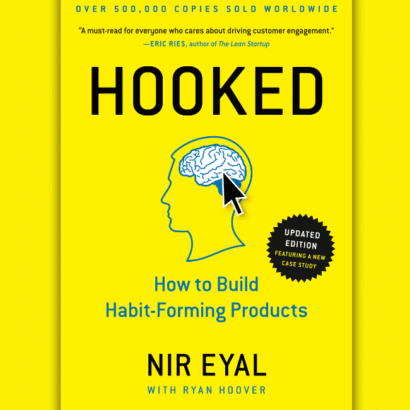
Description
By Nir Eyal
Book Summary:
“Hooked: How to Build Habit-Forming Products” is a non-fiction book written by Nir Eyal, a well-known expert in the field of behavioral design and habit formation. The book provides a comprehensive guide on how to build products that are designed to be habit-forming, and how to use this knowledge to create products that are both engaging and profitable.
Book Overview:
The book is divided into four parts, each exploring a different aspect of habit formation:
- The Hook Model:
- Eyal introduces the Hook Model, a four-stage process that explains how products become habit-forming: Trigger, Action, Variable Reward, and Investment.
- The Psychology of Habit Formation:
- Eyal explores the psychological principles that underlie habit formation, including the role of dopamine, the power of social influence, and the importance of emotional connection.
- Designing Habit-Forming Products:
- Eyal provides practical advice on how to design products that are habit-forming, including how to create triggers, actions, variable rewards, and investments.
- The Dark Side of Habit Formation:
- Eyal discusses the potential downsides of habit-forming products, including addiction, exploitation, and the erosion of autonomy.
Key Concepts:
- The Hook Model:
- The Hook Model is a four-stage process that explains how products become habit-forming:
- Trigger: A cue that sets off the habit.
- Action: The behavior that follows the trigger.
- Variable Reward: The unpredictable reward that motivates the behavior.
- Investment: The effort or commitment that users make to the product.
- The Hook Model is a four-stage process that explains how products become habit-forming:
- Dopamine Loops:
- Eyal explains how dopamine loops work, and how they can be used to create habit-forming products.
- The Four Laws of Behavior Change:
- Eyal introduces the Four Laws of Behavior Change, which are:
- Make it obvious.
- Make it attractive.
- Make it easy.
- Make it satisfying.
- Eyal introduces the Four Laws of Behavior Change, which are:
- The Power of Social Influence:
- Eyal discusses the role of social influence in habit formation, and how products can use social proof to encourage behavior.
Challenges and Concerns:
- Addiction:
- Eyal warns about the potential for products to become addictive, and how this can lead to negative consequences for users.
- Exploitation:
- Eyal discusses the potential for products to exploit users, and how this can lead to negative consequences for both users and companies.
- Erosion of Autonomy:
- Eyal warns about the potential for products to erode users’ autonomy, and how this can lead to negative consequences for users.
Solutions and Recommendations:
- Designing for Habit Formation:
- Eyal provides practical advice on how to design products that are habit-forming, including how to create triggers, actions, variable rewards, and investments.
- Using the Hook Model:
- Eyal explains how to use the Hook Model to design products that are habit-forming.
- Balancing Habit Formation with User Autonomy:
- Eyal provides guidance on how to balance the need for habit formation with the need to respect user autonomy.
Style:
The book is written in a clear and engaging style, making it accessible to a wide range of readers. Eyal’s use of examples and anecdotes makes the book an enjoyable and thought-provoking read.
Reception:
“Hooked: How to Build Habit-Forming Products” has received widespread critical acclaim, with many reviewers praising Eyal’s ability to make complex concepts accessible and engaging. The book has been translated into numerous languages and has become a bestseller worldwide.
Comparison to Other Works:
The book is similar to other works on behavioral design and habit formation, such as “Influence: The Psychology of Persuasion” by Robert Cialdini and “The Power of Habit: Why We Do What We Do in Life and Business” by Charles Duhigg. However, Eyal’s unique perspective and style set the book apart from other works in the genre.
Key Features:
- Comprehensive Coverage:
- The book provides a comprehensive coverage of the topic of habit formation, including the psychology, design, and ethics of habit-forming products.
- Clear and Engaging Writing Style:
- The book is written in a clear and engaging style, making it accessible to a wide range of readers.
- Unique Perspective:
- Eyal’s unique perspective and style set the book apart from other works in the genre.
Conclusion:
“Hooked: How to Build Habit-Forming Products” is a thought-provoking and engaging book that provides a comprehensive guide on how to build products that are designed to be habit-forming. With its clear and engaging writing style, unique perspective, and practical advice, the book is an essential read for anyone interested in behavioral design and habit formation.